Thursday, October 25, 2012

Mr. Student Government Nice Guy

The first time I met Mr. Student Government Nice Guy, we were in an elevator together in my dorm this spring. He gave me a big ‘ole smile and asked politely, “Have you voted in the student elections this week?” I smiled back, confessing that, with the exception of the incumbent, I didn’t even know the other two candidates. Entirely unfazed, my unflappable elevator companion beamed, stuck out his hand and said, “Well you’re meeting one right now!”

The top dogs... or should I say 'Dores
Former Vanderbilt Student Government Vice Presidential candidate Taylor Bruce has never met a stranger, and probably never wants to. Despite his experiences in transferring schools, participating in Model UN, becoming a member of the Asian American Students Club (he is decidedly white) and running for high-profile roles in Vanderbilt Student Government, he claims his favorite activity is “meeting people.” My kind of guy.

“I’m sort of social so I just walk up to people and say hey what’s up and if they respond positively I’m friends with them, and if not, I’m not,” he says matter-of-factly. (Sort of social? This kid is literally my generation’s Eddie Haskell reincarnate, without creeping on your mom.) Taylor is outgoing to the point that he took on the role Darth Vader for a Model UN conference at Yale. Instead of acting as representatives of countries, college students honed debate and negotiation skills Star Wars style. He debated the challenges facing the galaxy, all while dressed as the leader of the Dark Side, complete with light saber.
"MR. MODERATOR, I OBJECT TO YODA'S POLICY CONCERNING THE WOOKIES."

Marching to the beat of his own drum, the effervescent Mr. Nice Guy works on Vanderbilt Student Government for both the benefit of his fellow students and sometimes himself – a typical millennial trait. We’d like to think that volunteering or having a service role is entirely altruistic, but padding the resume never hurt, right? Taylor explains, “Being on VSG is like representing Vanderbilt and I get to be at the core. VSG isn’t at top of the pyramid but it’s more at the center. It’s not the best student organization, but it is in the middle. It allocates funds, helping organizations get what they want, and students individually get what they want.”

Last year, when Taylor ran for Vice President of student government, he knew that his chances weren’t the best– but he wanted to run to get his name out there because he’ll have a wider audience when he runs for president next year. Washington bound? We would think so, but Mr. Nice Guy often outshines the Mr. Student Government, and I found that Taylor’s aspirations aren’t all about political power – not even close. 

When asked what he wants in life, Taylor responds, “I want to find abundance.” Whoa. Deep. I push him to dig little deeper: “It’s health, happiness, good people around me,” he says thoughtfully. “Abundance is not necessarily material wealth, although that would be helpful, but wealth in the sense that I can do whatever I want when I want. I would be able to help those that I like and are with me along the way. I could help get them what they want as well.”

So if he knows what he wants to do, how is he going to do it? This is where Taylor encounters a similar struggle to other millenials: we know we want to be happy, but how? “I’m still working to find my passion, but hopefully I have time,” he laughs. (Contagiously, I might add.) “I think some people are our are forcing themselves to figure out their passion. If I don’t find a job I’m interested, I don’t want it. Nobody wants to sit in a office for 80 hours a week and get paid less than what they deserve.”
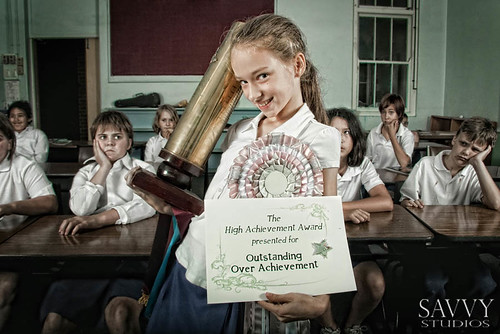
ugh.
Very self-aware, Mr. Bruce. He understands societal expectations, but wants to create his own path. In my experience, millennials have several ideologies when it comes to where they are going in life. Some of us want to blaze a trail, while others feel like everything was destined by the time they graduating – from the 5th grade. (Let’s hit puberty before we decide we want to be the Editor-in-Chief of the Harvard Law Review.)  Taylor reflects on our pre-deterministic peers: “They think that they have to what everyone expects of them. I originally thought I had to as well – it just seemed to be what everyone did. It took a lot of thinking, but I realized I don’t have to follow the same path as everyone else.”

But bursting the bubble is easier said than done. Taylor says he too conforms to the standard of his peers at Vanderbilt. “I experience stereotypes at Vanderbilt on a weekly basis. For tailgates, everyone dresses in a particular way – and I do too. I don the costume of a Vandy student: someone who comes from money and dresses in a style that is pretty Northeastern. Well, it’s Northeastern meets Southern – but it’s not something you can find anywhere else.” 

So is there more to Vanderbilt students than meets the eye? “Well, there’s more to everyone that meets the eye,” he says. “People have their own personalities, their unique ways of being. I’m sure there are some that are stereotypes that are straight to the core, but for the most part, everyone has a multifaceted personality.” 

Taylor smiles when he considers where Vanderbilt students fall in relation to the rest of our generation. As a transfer student from Ohio Wesleyan, where he lived with two other freshmen from Pasadena and Pakistan, he’s enjoyed seeing different perspectives our generation has to offer. 

“Vandy students are not indicative of our entire generation as a whole because most people do not get this kind of opportunity,” he says earnestly. “You can take any list of a top 100 school, whatever ranking. Vanderbilt will be in all of them. The people who get to experience that kind of thing is a very small portion of our generation in America.” 

Self-aware to the max – and the least bit smug about it. Taylor seems to have a keen perspective on life that many in our generation don’t have, yet his easy smile and approachability make him someone that you could talk to for hours, about everything and nothing.

Since he’s only been here three semesters, Taylor eagerly makes up for lost time by meeting as many people as he can. However, Mr. Nice Guy, in true Mr. Nice Guy fashion, is humble to boot: “I don’t think I’m some progressive super dude. I just like meeting people and I don’t care what they are like as long as they don’t suck. If you aren’t mean, then I am happy with you and we can be friends.” 

Let's make a deal... or better yet, a friendship!


Well said, Taylor. Sometimes those awkward elevator moments work out for the best.

Tuesday, October 9, 2012

Bursting the Vandy Bubble: The Go Getter Socialite

-->
-->On the hand holding an iPhone, she’s Vice President of Public Relations for her sorority and deciding if she should take a job at Calvin Klein or Saks 5th Avenue. On the other hand holding a glass of wine, she’s laughing with her friends and deciding which bar will draw the most athletes tonight. She’s the Vandy Go Getter Socialite, and if the bloggers at betcheslovethis.com were to meet her, she would be in their crowd faster than she could bat her lash extensions.

 
According to the Head Betches, you may not know the word, but you know the girl. “She's the one who has everything figured out. Everything she associates with is trendy, every guy she interacts with wants to date her and every girl she meets is desperate to be her friend. She speaks her mind and commands a room just by being in it…A betch is often confused with a bitch but make no mistake, they're different. A betch isn't just mean for no reason like a bitch is. She's edgy. Haters and nice people may label us 'narcissistic' but a betch knows that believing in herself is all it takes for everyone else to believe in her.” 

 
Ultimately, what the betches have created is a caricature of college girls who are on the road to get what they want, whether that’s the job of their dreams or just a Birkin bag. According to them, she’ll work her toned butt off to get either one – and there’s no judgment as to which is more important. The betches peruse topics through the betch list, which include important betchy things like diet coke, twitter, naps, themed parties, all things British and yoga.  They also lend their spicy commentary in reviews of celebrity culture, TV and movies. Columns like Betches Love This College and Betches Love This City, as well as a guy advice column called Ask a Pro provide more laughs for their sassy audience. 

Admittedly, Betcheslovethis is funny, and it rings true with lots of Vandy girls, but when you sit down with the aforementioned Vandy betch, even she knows that the Betches are less reality and more reality TV:

“I can appreciate the fact that they post about accurate things, but I see it more as funny than real. You know that what they are saying isn’t that serious when it comes to actual life. You might relate to the post, but you know at the end of the day that there’s more to your life than iced coffee, boys and tanning. I mean, you may like all of those things, but people are more dynamic and have so many more sides. That may a small part of who you are and what you enjoy but it’s not the whole person.”
     
Betches often talk about the importance of Greek life as a social climbing opportunity. However, this Vandy Go Getter Socialite sees Greek life as much more. “In terms of sororities at Vanderbilt and girls who care about Greek life, they’re often leaders in their houses and responsible for a lot more than people realize. They’re running big organizations and even though it might sound cliché, they are creating a sisterhood. Yea, it happens that a big part of sororities are superficial, but we are raising money for causes that are important and we are making an impact on campus.”  

And she claims that the socialite reputation may need deeper digging as well. “I think the whole socialite, going out, partying aspect is an escape from the pressure of going to such a hard school and bigger challenges we’re dealing with. We’re working our asses off studying, looking for jobs or internships and doing thing we are passionate about our. We really do care about our futures, the world, and the communities around us. So I think the socialite aspect is kind of an escape in a sense.”

When pushed a little harder on whether or not the betchy lifestyle is damaging, the GGS (pardon the betchy abrriev) says, “I think betches is bad in the sense that it’s a stereotype and people put labels on you that may or may not be true. It’s also bad in terms of getting a job and starting a career. If you embody all of the qualities they talk about, you’ll come across as ignorant and arrogant. People will be able to see that there’s no depth to you.”

However, she does think that there are positive qualities to the message that the betches offer: “Some of the posts are very much about how girls can get the job down if they are not afraid to do what they need to do. It can definitely be taken too far, but in some instances, a bit of confidence can go a long way.”

Ultimately, the Socialite Go Getter breaks the Vandy bubble in that she wants success, but for reasons that the betches would never consider:  “Career wise, I want to be in PR and marketing. I want to successful and I realize that’s part of the betch mentality. But at the same time I want to have a life – get married, have kids, give back to the community. Giving back to the community is really what I want to do, but I’m not sure how yet. I hope to become successful in order to give back.”  

To me, that mentality is quite the opposite from a direct quote from the definition of betch: “We’re the girls born with the silver spoon in our mouths. But like, fuck silver, we want gold.”

Tuesday, October 2, 2012

@Vandy_Makeouts and VandyManCandy


“Pick a cultural event or phenomenon that has been sparked by a blog or twitter feed in your area of interest; chronicle and analyze it.”

For the millenials, which obviously include the Vanderbetches and Vanderbros, we define “cultural event” kind of loosely. We can easily recognize what constitutes an important cultural phenomenon, from a social movement to a political election. However, despite late hours in the library, and early hours volunteering, sometimes the dedicated and passionate millenials act that part of our age that really can only focus on one thing: scopin’ out the hotties.

As a part of this generation, I want to make the case that we are, and will continue to become, valuable, upstanding members of society. We are smart, we are involved, we want to make a difference. And we take stalker pictures people making out.
This gem comes from a anonymous twitter account @Vandy_Makeouts. “Even though you might not remember, we will,” these sneaky bastards declare on their twitter profile.  However, the creators of the account are much too generous (and busy) to want to document all the glory themselves: they invite other Vandy tail grabbers to submit photos of their friends submerged in each other’s faces. Tacky? Perhaps. Hilarious? Absolutely.

But WOW, does this describe a good bit of the nightlife I’ve experienced at Vanderbilt. From people who were certified pros in high school, to geeks without a clue, college is fair game! Fishing with dynamite was never so easy – or so easy to document. The tech and society savvy subset of the millennial generation (Hello, Vandy) is actually pretty careful about what they post on facebook and online. They know they can be identified easily and would prefer not to be engaged in a drunken makeout in a picture online, so @Vandy_Makeouts has keep the pictures pretty anonymous thus far. Millenials know that a questionable, identifiable picture will only result in a call from a livid parent. “WHO IS THAT BOY?! AND WHY IS HE GIVING YOU WHAT APPEARS TO BE LIFE SAVING CPR? BECAUSE ONLY SOMEONE WHO WAS unconscious WOULD ALLOW THIS PICTURE TO APPEAR ONLINE!!!” (Depending on your parent, “young lady” or your first name and middle name might make an appearance in this rant.)

Despite our parents’ dismay (and probably disgust) we’re eating it up! (As we practically eat each other’s lips…. Har har.) With an inaugural makeout pic posted on September 25, @Vandy_Makeouts has garnered 421 followers. I’ve seen people perusing the feed in class, in libraries, and at meetings. Pretty much anywhere Vandy students are making genuine contributions to society, they are also looking at picture of their friends making out.

This isn’t just a Vandy phenomenon. Drunk collegiate voyeurs are on the rise across the country, and can be found at @ASUMakeouts, @AlabamaMakeouts, @MizzouMakeouts and the mack daddy (no pun intended), @MSUMakeouts with 2118 followers. If you’re really looking to broaden your social media scope, millenials can head to campusmakeouts.com, where hundres of pictures are posted.  It’s a makeout epidemic that we didn’t know existed (because we were probably too drunk to realize what was happening) but now our makeouts will live on indefinitely! And by indefinitely, I mean until the next funny twitter feed pops up.

So the voyeurism part is a little weird, but kind of understandable. You’re standing with your buddies or your babes at the bar, and you see a member of your posse playing tongue hockey with that hottie (or nottie) in a corner. You snap a pic, email to the feed, they upload it, and everyone has a few laughs. But here’s the really bizarre part: people kind of WANT to see themselves on the feed. The generation that lives online is really now living ALL parts of their lives online. It’s a 15-seconds of fame kind of thing to see yourself be seen by (at the very least) 421 other people. The psychology is a little twisted, and I would love to sit down with someone skilled in psychoanalysis to hash this phenomenon out, but for now, let’s just say that the millenials like to see and be seen.

Ok, now that I’ve indicted everyone, I have to turn my attention to the ladies. The women at Vanderbilt are forward thinking, progressive, capable individuals, who enjoy the respect and equality of their male peers. However, they still often face 18-22 males checking them out and not seeing much more than a [insert body part here]. However, three self-described Vanderbelles, and their cadre of followers, are turning the tables on their female “looked-at” status.

They’ve started a blog called VandyManCandy.tumblr.com, where, like @Vandy_Makeouts, they invite their followers to post pictures, but this time, it’s of good-looking, unaware Vanderbros. “Vandy Candy” is a nickname for younger Vandy ladies, so the anonymous creators reinvented the term to apply to guys. Again, the voyeurism is a little weird, but one can definitely see the power trip that these girls get by subjecting the boys around campus to a reduced, sexualized status. Freudian, but, again, hilarious.


So what does this say about us? Well, from the beginning, I wanted to be an advocate and a voice for the Vanderbilt student. I wanted to document and reveal our successes and our passions, our dedication and our intelligence. But you know what? Our technological inclinations are a huge part of how we communicate and talk to one another, and sometimes, we just want to talk about sex, baby.

Monday, October 1, 2012

Redirection


So with some guidance from my peers last week, I’ve honed in on what it is I need to do with my blog – redirect! The smattering of ideas floating around is pretty indicative of someone of the Millenial generation – but with a little direction, I am making progress in what I feel is the right direction: what people don’t like about the millenials, and more specifically, Vanderbilt students.

Breaking the stereotypes that society has created for us – and the stereotypes that we have for each other – won’t be easy. To start building my case for the defense of the Vandy students, I first had to find out what exactly we stood accused of. Getting the facts straight was going to be important, because I knew the state (Nashville) was going to come out with some very strong opening remarks.

I started out subtly, browsing racks in stores, or ordering something from a bar. Casually, in what I perceived to be a very undercover, black and white film noir kind of way, I would inquire, “Do y’all get a lot of Vandy students in here?” The responses were universally yes, with varying degrees of confusion as to why I was asking. (I knew they would all be yes; my inner defense lawyer/detective picked the spots carefully.) The answers to me next question, however, were somewhat more varied: “What do you think about the Vandy kids?” 

“I mean, I guess they’re fine.”

“Vanderbilt students aren’t as spoiled as people think.”

“Can I say they are the worst?” (Me: ouch.)

“I don’t know if I’m going to get in trouble for saying this, but they are pretty much good for one thing and that’s their credit cards.”

Fair enough. Their answers were ones that I probably could have deduced on my own. In my four years here, I’ve seen Vanderbilt students get in screaming matches with cab drivers, not tip on expensive dinners and just be generally rude to people who are serving them.

It was at this point after these initial remarks that I wanted to start immediately defending, but refuting the feelings of my interviewees would have functioned to achieve the opposite of what I was trying to do: prove that we’re not brats. I bit my tongue and inquired further: “Why do you think that?”

At this point, I got the stinkeye from one or two people who were starting to become suspicious of my now less than sneaky questioning, but there was one bartender who summed up the charges, and galvanized for me what I hope to disprove in my blog:

“I don’t think any of the Vanderbilt kids are bad people; I just think they don’t know what it’s like to be in the real world.”

Now there was something I could work with! No I can’t prove why we’re not the worst, because if someone feels so strongly that we are the worst, there probably isn’t much I can say to make them not feel that way. However, perhaps for those people on the fence, I can do something to show them that Vanderbilt students, and people of my own generation, are more than just a bunch of entitled, self-centered ne’er-do-wells.  We do have heart, we do have substance, and it’s going to be my job to represent them in this trial of the century. I’ll have to do my homework, get some key character witnesses, but I think I can make a case for us. We have our vices, we make mistakes, but we’re human – we can’t be summed up in a sentence as cookie cutter people. I’m out to find those people who breaking the collective mold, and prove to the world that Vanderbilt, and the millenials, are more than we seem.

Wednesday, September 26, 2012

Plans


Inevitability is setting in. Pumpkin spice lattes at Starbucks are back (WHOO!) and I had to put on the only long sleeve shirt in my closet this morning. Fall is in the air, and Vanderbilt is putting its nose to the grindstone. First exams are coming up, job applications are due and test results are coming in. My dad emailed me his hotel reservation for graduation in the spring. Sigh. I thought the year had just started.

In 30 minutes, one of my best friends will find out her MCAT score. This is the second time she has taken the test and a lot is riding on this number, this simple little number. If her score goes up, she’ll apply to med schools and start the education to become a doctor that makes my liberal arts undergrad degree seem like preschool playtime.  But if her score goes down, my friend will face crushing disappointment. Or so she perceives it. She’s wanted to be a pediatrician since high school and all of her plans are in the balance right now, all based on this score. Her value to the schools is only a number, but I know she’s so much more.

One of the things that people need to know about our generation is how much we want to be valued. We’ve been raised to achieve, to set ourselves apart. We didn’t grow up playing, we grew up training, It was a competition from the beginning, because we were taught that our value was contained in what we could produce or achieve. My friend says she knows that her score doesn’t define her, but in a way, it does. She might be able to explain on the application her passion for people, but an admissions officer will never be able to see her carefully bandage the twisted ankle of one of her campers or her calming effect on my frazzled nerves. Because of culture’s obsession with achievement, the way my friend wanted to help people may have to change.

You’d think we’d be ok with change, but we’re not. Millenials come from parents who scheduled playdates and practices, and we do it to ourselves. Go with the flow? Not with a med school application in the works, running a service organization and a part time job. We’re ADD about our activities, but we don’t like changing our plans. And leaving things up to chance? Yeah, right.

We want to control what happens to us because our achievements are how we are evaluated. “And I need at least a ___ on my ___ to get into ____” is a phrase I have heard after many a dramatic monologue from an exhausted college peer. We make plans (or plans are made for us) at such a young age and when we figure out that they might not pan out exactly the way we wanted, we’re at a loss.

Lost at 22? It’s not entirely groundbreaking, but I think it’s more difficult for us because we have such high expectations placed on us. Sometimes, though, things just don’t work out the way we want them to. We’ve got to keep moving, keep searching for things that will fulfill us as people, not other people who will see us as just things.

As I’ve mentioned, our generation has many challenges we need to rise to, and that’s fine, but we need to rise to the challenges as people, not test scores or resumes. Plan B shouldn’t have to stand for Plan Bad or Plan Bust. We need step away from Plan A and Plan B and just be. Plan Be. Be yourself, and be happy with that.  


Tuesday, September 11, 2012

The Investigation Begins


I distinctly remember watching the fireworks explode at 12:00 am January 1, 2000. They burst into huge flashes of light and sound, and then just as quickly as they lit up the sky, they were gone.  And looking back, I didn’t even care. I was ready for the next pattern, the next boom – at age 10, I couldn’t even focus for 5 seconds on one beautiful array of color and light before I wanted to see the next one. Such is the blessing and the curse of the ADD millennial generation – and I knew it from the moment the millennium started.

We exist in a temporal world where our information comes at us as loud and bright as a firework, and disappears just as quickly. Blogs, sound bytes, video clips, status updates, tweets, 15 minutes of fame, web series. We have a lot to process, so we process fast. We’re texting on our iPhones, YouTubing the latest video, Facebook messaging a friend, all while Keeping Up with the Kardashians. Even those with staying power resort to shock and awe to remain relevant. Today’s biggest music icons (Lady Gaga. Katy Perry, Nicki Minaj) are in a constant state of reinvention, all to keep us tuning in for the next performance or video. Say what you will about the quality of our media consumption, the quantity is unparalleled.

However, despite our brand consciousness (craziness?), fragmented media habits, and what is generally considered a “me first” attitude, I want to peel back the layers on the millennials.  Just from my experience with my own peers, I can tell you we’re a series of paradoxes. We want to serve others, but we care primarily about ourselves. We want to be adults in the real world, but we love our extended childhood. We are driven, but would often prefer for things to be handed to us. And the contrary is true as well: many any of us come privilege but would prefer to earn accolades for ourselves.

We’re aware that we’re paradoxical – and we’re aware that our distinct form of learning and processing isn’t the only tribulation we face. We’re also aware that we’re inheriting huge, complex challenges. A rocky economy, a volatile political climate, and environmental threats – these issues will soon be ours alone to deal with.  Are we going to face to the uncertainty, taking on the necessary responsibilities, or let it cripple us as we shrug our shoulders and look around for someone else to fix it?  

As a part of this generation, and as someone who is about to break the protective barrier and enter the real world, I want to examine whether or not we can rise to the challenges we face. Not only that, I want to know what we think, what we value, what we believe. How do we feel about ourselves? What does the rest of the world think of us?

I’m lucky enough to be living in a living laboratory, Vanderbilt University, where I can examine the both the little quirks (texting without looking at our phones in class) and the big driving forces (differentiating ourselves as both individuals while still being relevant to the community) of the millennial generation. All of this will indicate something about what is to come in our country – the good, the bad and the ugly.  Whether or not you are part of this generation, the millennial coming of age story, which I plan to tell as honestly as possible, is consequential. The foundation we are laying now is the foundation of the future of our country in a critical time.

Of course I can’t make sweeping generalizations about my generation based on my peers here at Vanderbilt, but I do think we represent of critical slice of what is to come. By understanding driven and passionate Vanderbilt students, I want dig deeper into what is at the heart of my generation. Yes, as individuals, we’re paradoxical, have ADD and face unprecedented challenges, but, together, we’ve been primed to make an impact. One firework may not last very long, but when they’re set off at the same time, they can illuminate the darkest night.

Wednesday, September 5, 2012

Analysis of 5 Blogs


As a college girl and card carrying member of the millennial generation, reading blogs is right up my alley. Like my peers, especially those at a competitive top twenty school, I value my own time above everyone else’s (for better or worse…probably worse) so I enjoy the easily digestible, sound bite, quick draw McGraw format that’s used in most successful blogs. In reading the Huffington Post’s Guide to Blogging, I was compelled by the bevy of information about blogs at my fingertips, most which I had never really considered at length – from creating buzz to finding a voice. (The history of the Huffington Post was interesting but I didn’t quite make the connection with how that would help my blog… again with the me thing?! I think there might be more where that came from.)  

While simultaneously considering all the advice about blogs, though, I felt a distinct sense of “Well, duh.” Growing up with my fingers usually at a keyboard and not a book, I could tell that the Huffington Post Guide’s goal was to patiently, albeit wittily, explain the ins an outs of blogs to someone unfamiliar with this crucial form of media. I know what makes a blog successful, because I’ve grown up following them. To me, this is the “traditional form of media”, not the hour-long news specials and newspapers and ye olde taverns of precious generations.  Perhaps me giving a slight cold shoulder to the explanations of the Huffington Post Guide is just the narcissism that has sneaked and streaked its way across my generation and college campus, but at the very least, I am self-aware. I (we) read blogs because they are fast, passionate, and to some extent, very self-centered – just like us.

Needless to say, I was happy to put down the book that told me how it was done, and get started on the blogs that made it happen.


Andrew Sullivan on TheDailyBeast.com: The most appealing to me of the blogs, Sullivan writes with a quick wit and an on a variety of topics that keep my generational ADD satisfied. I very much appreciate his tendency to include quotes and opinions from his readers, a refreshing addition to the blogosphere. Sullivan’s usage of photos and videos add color to his already vivid writing. I particularly enjoyed his live-blogging of the RNC and DNC in the past few weeks. The only way to remain relevant in such a vast network of reporting is to sometimes go minute by minute and I found his commentary brief and enlightening. Finally, not in terms of writing, but in terms of perspective and ideology, Sullivan’s conservatism is refreshing for my generation that is progressive on social issues.

Gizmodo.com: I also have very much enjoyed reading Gizmodo, much to my surprise. Even though I grew up in a technologically saturated world, I know that there are those out there who would surgically attach their electronic devices to their bodies if they knew said device probably wouldn’t be obsolete in .5 seconds. I am not all up on the tech jargon, nor do I really care to be. However, Gizmodo provides a great balance between the tech-sissy, the tech-savvy, and the tech-sassy (Some of the comments from the tech community can get very heated! Perhaps we should add technology to the American religion-politics taboo.)  The balanced writing and knowledge of the broad audience reflects some of the ideas in On Writing Well.  All in all, the variety of formats keeps the site fresh (“What to Buy in September” was a list, “Is it bad to shut down my computer regularly?” was a question and answer piece, and “Lenovo X1 Carbon: Holy Crap” was a review) and the endless number of fascinating topics is enough to think even my grandfather (“What’s MyFace?!”) might want to check out Gizmodo.

Well Blog on NYTimes.com: Again, a variety of topics based on a general theme makes a strong selling point to my distracted friends. “Ooh, rare infections!” “Aah, organic food!” The headline fireworks notwithstanding, the simple, recognizable format of the NYTimes.com blog page creates a navigable page for maximum clicking. While the headlines were often attention-grabbing in typical journalistic fashion, I often found myself missing the snark of Andrew Sullivan and the writers of Gizmodo when reading the Well Blog. It is extremely informative – highly valued in a time of information and misinformation overload – but it can often read a little dry. The Huffington Post Guide suggests writing like you speak, and, if some of the writers of the Well Blog are in fact embodying that lesson, I’d think twice about inviting them to a dinner party.

Howard Fineman on the HuffingtonPost.com: After looking forward to reading one of the bloggers who wrote for the site who literally wrote the book on blogging, I have to say, I was slightly disappointed. While I very much enjoyed the writing of Fineman, particularly “The Man Who is Obama’s Problem,” an excellent profile of a man he sat next to on a plane, I was hoping for more timely posts, and a bit more multimedia integration. Sullivan can go back and forth on topics, live blogs, photos and videos, while Fineman seems more structured and deliberate in his writing. In my opinion, Fineman often displays stronger writing chops, but in the blogosphere, that isn’t the only piece in the puzzle.


David Roberts on Grist.org: Again, I thought that David Roberts may have missed the “blog often” memo from the Huffington Post Guide. With just five blogs since August 14, I feel like he might not have his finger on the pulse as much as the other blogs. He also writes extremely long blogs, which could indicate why there is so much time between them. I enjoyed his piece on post-truth politics, but it was so long that I had gone back to Gizmodo.com and hit refresh to see if there was anything new to read.